
Yeti Nesodillo arcangellii
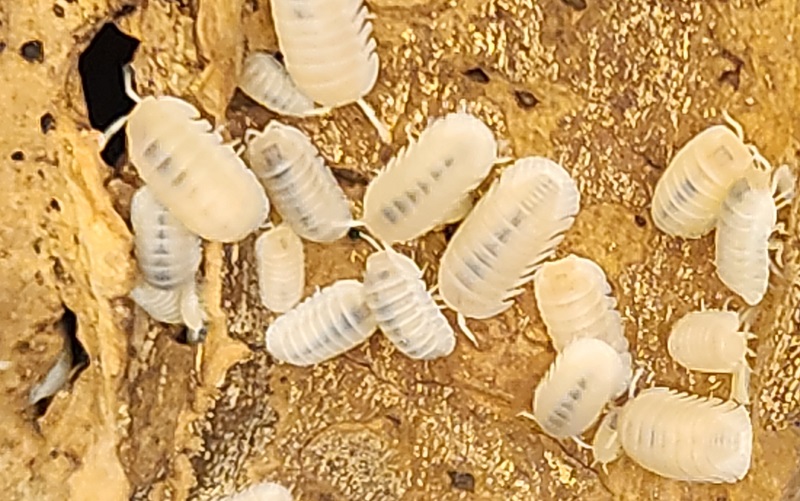
The all-white albino variant of the Nesodillo arcangellii — pure white, semi-translucent, and utterly captivating.
Overview
'Yeti' is a rare albino variant of Nesodillo arcangellii isopod. The Yeti is entirely white — including the eyes, which lack all pigmentation. Its body is semi-translucent, and if fed colorful foods like carrots, you can actually see the orange pigment moving through its digestive tract — a fascinating and unique trait. Hardy, active, and beginner-friendly, the Yeti is a collector's gem.
Habitat & Setup
Substrate mix:For best results, use Isopod Paradise Organic Substrate specifically formulated to support healthy colonies. If you would rather mix your own, we recommend a blend of 70% organic topsoil, 10% flake soil, 10% milled sphagnum moss, 8% organics(mushroom compost, earthworm castings and leaf litter) and 2% calcium
Hides & decor: Bark tubes and flats, leaf litter layer, moss patches, coco huts, lotus pods. Cuttlebone for calcium source.
Moisture: Consistently lightly damp throughout. Never allow to fully dry out. A small gradient from moist to slightly drier gives the colony options to self-regulate.
Diet & Feeding
Omnivorous detritivores just like their Shiro Utsuri cousins. Varied diet with regular protein and a constant calcium source. Pro tip: feed colorful foods like carrot and watch the pigment travel visibly through their translucent bodies — a truly unique experience!
✓ Feed These
- Leaf litter
- Carrot, sweet potato, pumpkin
- Freeze-dried shrimp or fish flakes
- Powder formulas like Isopod Chow, Repashy Morning Wood, Bug Burger, etc.
- Soft rotting wood and decaying plant matter
Feeding frequency: Rotate foods on a weekly basis. Remove leftover food when food begins to mold.
Breeding & Lifecycle
Moderate and steady breeders. A stable colony establishes reliably with consistent care. The albino trait breeds true.
Mancae care: Juveniles are hardy. Maintain consistent humidity and offer fine food at substrate level. Springtails recommended as cleanup crew to prevent mold.
Colony tips: Active foragers that will explore throughout the day and night. Their white coloration stands out brilliantly against dark substrate and leaf litter.
The Yeti's semi-translucent body means you can literally watch its digestion — feed it a carrot and you'll see the orange color moving through its body as it processes the food. It's one of the most visually fascinating traits in the entire isopod hobby.