
Yellow Dot Porcellio ornatus
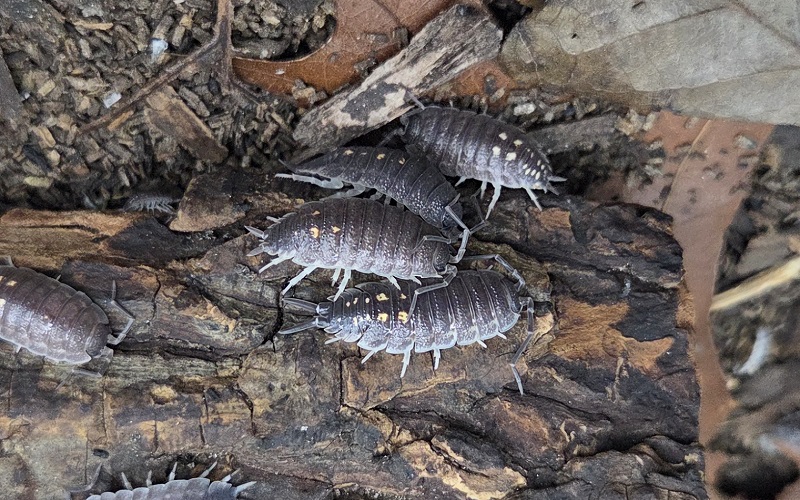
A bold Spanish beauty with vivid yellow-spotted patterning on a dark, contrasting base.
Overview
Porcellio ornatus 'Yellow Dot' is a large, visually striking isopod native to the arid and temperate regions of Spain. Its dark gray-to-black base is punctuated by vivid yellow spots that create a bold contrast few Porcellio species can match. Adapted to the dry limestone-rich habitats of the Iberian Peninsula, it requires drier conditions and high ventilation — making it an excellent choice for Mediterranean or arid-style bioactive setups. A rewarding species for keepers ready to move beyond purely humid enclosures.
Habitat & Setup
Substrate mix: For best results, use Isopod Paradise Organic Substrate specifically formulated to support healthy colonies. If you would rather mix your own, we recommend a blend of 70% organic topsoil, 10% flake soil, 10% milled sphagnum moss, 8% organics(mushroom compost, earthworm castings and leaf litter) and 2% calcium
Hides & decor: Cork bark, flat limestone or slate pieces, dried hardwood leaf litter. Provide generous hide coverage — they use it regularly. Cuttlebone for calcium source.
Moisture: Keep the enclosure predominantly dry. Maintain one small moist retreat with sphagnum moss for hydration and molting. High ventilation prevents stagnant conditions and keeps humidity in the correct range. Add springtails to the moist zone to suppress mold.
Diet & Feeding
Good feeders with an appetite for decomposing organic matter, root vegetables, and protein. Weekly protein keeps the colony healthy and supports reproduction.
✓ Feed These
- Oak & hardwood leaf litter (staple)
- Dried shrimp or fish flakes
- Sweet potato, carrot, yam, zucchini
- Rotting hardwood for grazing
- Powder formulas like Isopod Chow, Repashy Morning Wood, Bug Burger, etc.
Feeding frequency: Rotate foods on a weekly basis. Remove leftover food when food begins to mold.
Breeding & Lifecycle
Moderate breeders that build steadily once the colony is established. Starter groups typically take a few months to become a clearly visible, well-reproducing population. Females carry young in a marsupium and give live birth to mancae.
Mancae care: Juveniles emerge as small adults and are immediately active. Offer fine food particles on the substrate surface and ensure the moist retreat is accessible for young animals.
Colony tips: Start with 15–25 individuals. Calcium availability in the substrate is especially important for this species given their limestone-adapted origin — keep cuttlebone stocked at all times.
Porcellio ornatus 'Yellow Dot' is well-suited for Mediterranean and rocky arid bioactive setups — a niche that few isopods fill. Unlike most hobby species, it actually thrives in the lower-humidity conditions that would stress tropical Porcellio morphs.