
White Porcellio laevis 'White'
A striking all-white giant — one of the largest and most eye-catching morphs in the hobby.
Overview
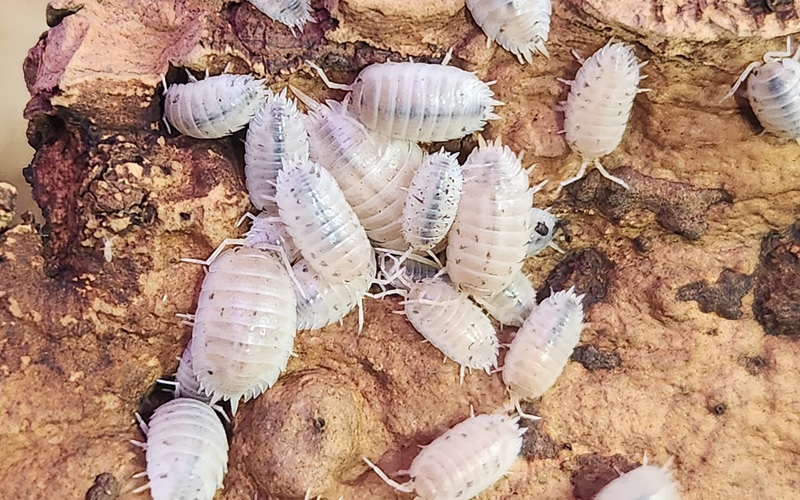
Porcellio laevis 'White' is a selectively cultured morph of the widely kept P. laevis, prized for its uniform cream-to-white coloration and impressive size — among the largest morphs in the laevis group. Like all P. laevis, it is hardy, diurnally active, and a prolific breeder. Its striking pale appearance makes it a standout display species, and its robust appetite makes it an effective bioactive cleanup crew in larger enclosures. Its meat protein forward hunger in combination with its voracious appetite make the laevis Whites not an ideal bioactive cleanup crew for delicate animals.
Habitat & Setup
Substrate mix: For best results, use Isopod Paradise Organic Substrate specifically formulated to support healthy colonies. If you would rather mix your own, we recommend a blend of 70% organic topsoil, 10% flake soil, 10% milled sphagnum moss, 8% organics(mushroom compost, earthworm castings and leaf litter) and 2% calcium
Hides & decor: Bark tubes and flats, leaf litter layer, moss patches, coco huts, lotus pods. Cuttlebone for calcium source. Their large size benefits from generously sized hides.
Moisture: Maintain a moisture gradient with one-third of the enclosure damp and two-thirds dry. Good cross-ventilation is important. Add springtails to manage mold from heavy feeding activity.
Diet & Feeding
Laevis Whites are enthusiastic and high-volume feeders with notably elevated protein needs compared to most beginner species. Consistent protein availability is essential — colonies deprived of protein may nip at soft-bodied tank inhabitants. A well-fed colony is safe and highly effective as a cleanup crew.
✓ Feed These
- Oak & magnolia leaf litter
- Dried shrimp or fish or fish flakes
- Carrot, sweet potato
- Powder formulas like Isopod Chow, Repashy Morning Wood, Bug Burger, etc.
- Rotting hardwood for burrowing & grazing
Feeding frequency:Rotate foods on a weekly basis. Remove leftover food when food begins to mold. Keep protein offerings consistent — this species has a high protein requirement.
Breeding & Lifecycle
Among the easiest breeders in the hobby. Females carry developing eggs in a marsupium and give live birth to mancae. They breed year-round with no seasonal trigger required. Colonies establish and explode in size quickly once conditions are stable.
Mancae care: Juveniles emerge as miniature adults. Offer fine protein powder (crushed fish flakes) on the substrate surface alongside leaf litter for the first few weeks.
Colony tips: A starter group of 20–30 adults will build rapidly. Mature females are visibly larger than males. Monitor colony size and split cultures before overcrowding stresses the group.
White Out is one of the largest Porcellio laevis morphs, regularly reaching 2.3 cm. Their pale coloration shows off their internal organs in good light — making them a fascinating choice for observational setups.