
SilverbackPorcellio werneri
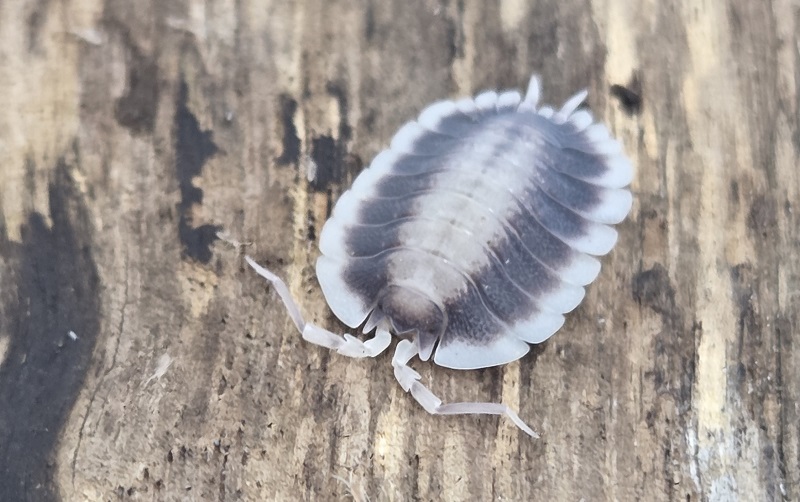
The alien of the isopod world — a flying-saucer-flat body with a dramatic silver stripe down its back.
Overview
Porcellio werneri is one of the most morphologically unusual isopods in the hobby — its remarkably flat, oval, shield-like body is unlike any other common Porcellio species, earning it the nicknames "Greek Shield" and "Pancake Isopod." The 'Silverback' line is a distinct population variant distinguished by a broad, silvery-white stripe running the full length of the body against a dark gray base. Native to the rocky, dry limestone habitats of Greece and the Aegean islands, this species requires drier conditions and is a seasonal breeder — making each new generation genuinely exciting.
Habitat & Setup
Substrate mix: For best results, use Isopod Paradise Organic Substrate specifically formulated to support healthy colonies. If you would rather mix your own, we recommend a blend of 70% organic topsoil, 10% flake soil, 10% milled sphagnum moss, 8% organics(mushroom compost, earthworm castings and leaf litter) and 2% calcium
Hides & decor: Flat bark, limestone slabs or slate pieces (their ultra-flat body shape allows them to squeeze under very low-profile hides), dried hardwood leaf litter, forest moss in the moist retreat. Adult males may be territorial — provide multiple hides to reduce conflict. Cuttlebone for calcium source.
Moisture: Keep the enclosure predominantly dry. Maintain one small moist retreat with sphagnum moss or damp leaf litter for hydration and molting. Good ventilation is essential. Add springtails to the moist zone to manage any mold.
Diet & Feeding
Good generalist feeders that prefer partially decomposed organic matter. They graze on leaf litter, lichen, moss, and rotting wood, and benefit from protein supplementation weekly. Calcium is particularly important for this species given its limestone-adapted origin.
✓ Feed These
- Oak & hardwood leaf litter (staple)
- Rotting white wood for foraging
- Dried shrimp or fish flakes
- Carrot, sweet potato, zucchini
- Powder formulas like Isopod Chow, Repashy Morning Wood, Bug Burger, etc.
- Forest moss & lichen (occasional)
Feeding frequency: Rotate foods on a weekly basis. Remove leftover food when food begins to mold. Keep cuttlebone and calcium sources available at all times — molting issues are commonly linked to calcium deficiency in this species.
Breeding & Lifecycle
Seasonal breeders — this is one of the most notable traits of P. werneri. Expect only 1–2 broods per year, making successful reproduction genuinely rewarding. Females carry young in a marsupium and give live birth to mancae. Males may be territorial with other males.
Mancae care: Juveniles emerge as tiny but perfect miniature adults. Offer fine protein powder and small fragments of leaf litter on the substrate surface in the early weeks.
Colony tips: A starter group of 20–30 is recommended. Provide multiple flat hides to reduce male territorial conflict. Patience is key — this species rewards careful, consistent husbandry over time.
Porcellio werneri is so remarkably flat that it can squeeze beneath hides with almost no clearance — their body shape evolved for life in the tight crevices of rocky Greek limestone cliffs. The Silverback line's distinctive white dorsal stripe is unique to a specific wild population, making each captive-bred individual a living piece of that lineage.