
Salmon Caribodillo martinicensis
A soft salmon-pink Isopod with warm peachy tones and exacting care requirements.
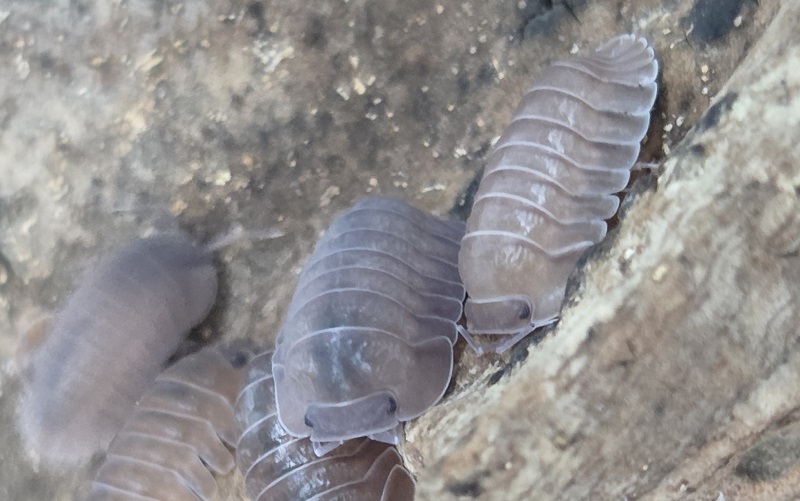
Overview
'Salmon' isopods were once classified as Cubaris sp. Caribodillo martinicensis is the new taxon name. It’s a medium-large isopod from the island of Martinique. The older the isopod the darker the color. These salmon-color beauties are easy to keep and breed, and therefore suitable for beginners. Like Cubaris sp., it demands consistent high humidity, stable warmth, and a well-established enclosure. Its soft color makes it a uniquely elegant display species.
Habitat & Setup
Substrate mix: For best results, use Isopod Paradise Organic Substrate specifically formulated to support healthy colonies. If you would rather mix your own, we recommend a blend of 70% organic topsoil, 10% flake soil, 10% milled sphagnum moss, 8% organics(mushroom compost, earthworm castings and leaf litter) and 2% calcium
Hides & decor: Bark tubes and flats, leaf litter layer, moss patches, coco huts, lotus pods. Cuttlebone for calcium source.
Moisture: High gradient moisture — damp substrate 70/30 gradient. Mist weekly.
Diet & Feeding
Carotenoid-rich feeding (sweet potato, carrot, shrimp) supports the warm pink-orange coloration.
✓ Feed These
- Indian almond leaf litter
- Sweet potato, carrot (carotenoid-rich)
- Dried shrimp, fish flakes
- Powder formulas like Isopod Chow, Repashy Morning Wood, Bug Burger, etc.
- Mushroom pieces
Feeding frequency: Rotate foods on a weekly basis. Remove leftover food when food begins to mold.
Breeding & Lifecycle
Not affected by seasons and breeds throughout the year.
Mancae care: Very sensitive. High humidity and springtails essential.
Colony tips: Consistent carotenoid feeding maintains the salmon color across generations. Set up the enclosure well before adding animals.
The salmon color in this species comes from carotenoid pigments — the same compounds that make salmon, flamingos, and shrimp pink.