
Red Tiger Nesodillo sp.
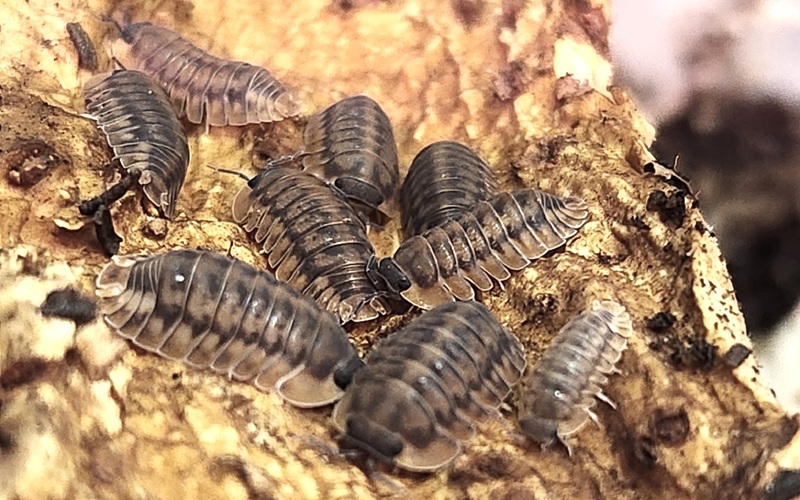
A bold red-and-dark striped Nesodillo with an untamed, wild appearance.
Overview
'Red Tiger'was originally classified as a Cubaris species but has since been reclassified as a Nesodillo sp. that displays dramatic red and dark brown/black striping across its body, giving it a fierce, wild appearance that belies its shy, slow nature. A high-humidity advanced Nesodillo from Thailand that rewards patient, consistent care.
Habitat & Setup
Substrate mix:For best results, use Isopod Paradise Organic Substrate specifically formulated to support healthy colonies. If you would rather mix your own, we recommend a blend of 70% organic topsoil, 10% flake soil, 10% milled sphagnum moss, 8% organics(mushroom compost, earthworm castings and leaf litter) and 2% calcium
Hides & decor:Bark tubes and flats, leaf litter layer, moss patches, coco huts, lotus pods. Cuttlebone for calcium source.
Moisture:High gradient moisture — damp substrate 70/30 gradient. Mist weekly.
Diet & Feeding
Carotenoid-rich foods helps maintain the red coloration. Feed shrimp and carrot regularly.
✓ Feed These
- Leaf litter (staple)
- Sweet potato, carrot (carotenoid-rich — key for color)
- Dried shrimp, fish flakes
- Powder formulas like Isopod Chow, Repashy Morning Wood, Bug Burger, etc.
- Krill powder (occasional)
Feeding frequency: weekly. Remove leftover food when food begins to mold.
Breeding & Lifecycle
Slow, methodical breeder. Stability and consistent conditions are the only way to success.
Mancae care: Very sensitive. Maintain high humidity and provide springtails and fine food particles.
Colony tips: Establish a minimum of 15–20 adults and be patient. Red Tiger is not a quick-breeding species.
Despite its fierce name and striped appearance, the Red Tiger isopod is one of the shyest and most gentle species in the hobby — the 'tiger' is purely aesthetic.