
Papaya Cubaris murina
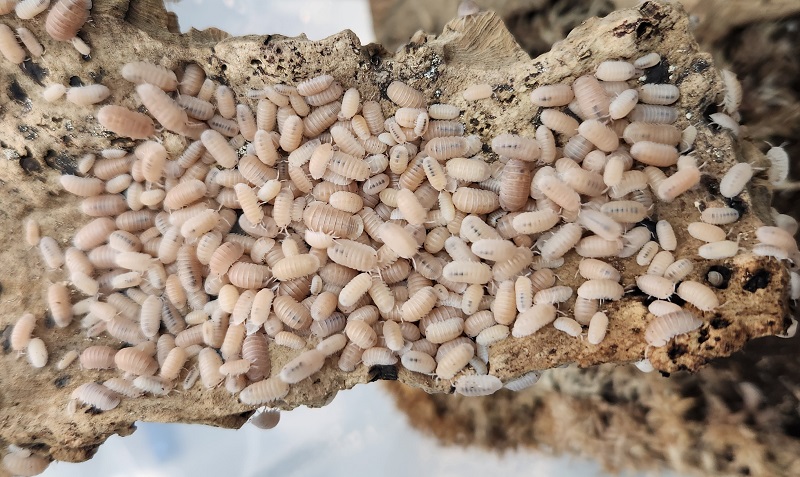
A pinkish-orange murina morph with the soft glow of ripe papaya.
Overview
Cubaris murina 'Papaya' displays a vibrant pinkish-orange color morph — one of the most visually striking of the murina morphs. Like all C. murina, it requires consistently high humidity and warmth but is somewhat more forgiving than exotic Cubaris sp. morphs.
Habitat & Setup
Substrate mix: For best results, use Isopod Paradise Organic Substrate specifically formulated to support healthy colonies. If you would rather mix your own, we recommend a blend of 70% organic topsoil, 10% flake soil, 10% milled sphagnum moss, 8% organics(mushroom compost, earthworm castings and leaf litter) and 2% calcium
Hides & decor: Bark tubes and flats, leaf litter layer, moss patches, coco huts, lotus pods. Cuttlebone for calcium source.
Moisture: High gradient moisture — damp substrate 70/30 gradient. Mist weekly.
Diet & Feeding
Carotenoid-rich foods help maintain the warm golden coloration. Same dietary needs as other murina morphs.
✓ Feed These
- Indian almond & magnolia leaf litter
- Sweet potato, carrot (carotenoid-rich)
- Dried shrimp, fish flakes
- Powder formulas like Isopod Chow, Repashy Morning Wood, Bug Burger, etc.
- Mushroom pieces
Feeding frequency: Rotate foods on a weekly basis. Remove leftover food when food begins to mold.
Breeding & Lifecycle
Steady breeder like other C. murina morphs. Mature females an produce broods every 1-2 months. Consistent humidity and warmth are key.
Mancae care: Need consistent humidity. Fine food particles at substrate level are important.
Colony tips: Same as other murina morphs — warmth and humidity. Carotenoid feeding maintains color across generations.
The 'Papaya' name perfectly captures both the color and the soft, tropical feel of this morph — it's one of the warmest-toned C. murina variants in the hobby.