
Panda King Cubaris sp.
One of the most iconic isopods in the hobby — bold black-and-white patterning on a large, impressive body.
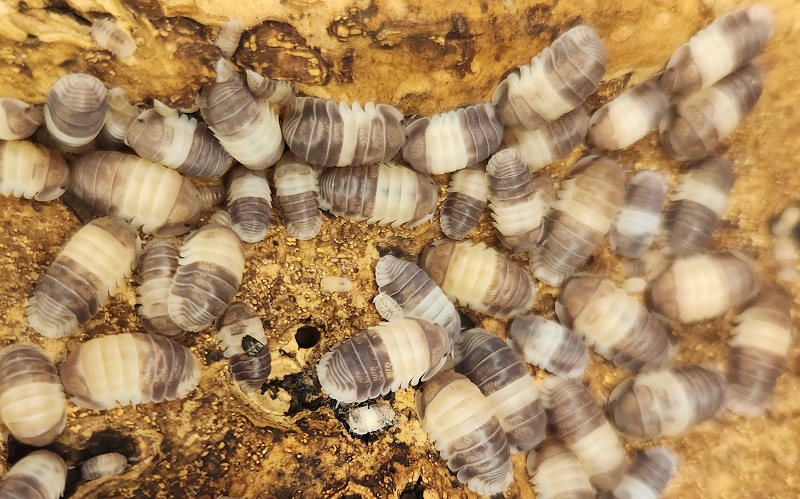
Overview
Cubaris sp. 'Panda King' is a flagship species of the isopod hobby worldwide. Its dramatic black-and-white coloration, large size, and regal appearance make it one of the most sought-after display isopods. While requiring high humidity and stable warmth like other tropical Cubaris, it is slightly more forgiving than the most demanding species and rewards consistent care with a thriving, stunning colony.
Habitat & Setup
Substrate mix: For best results, use Isopod Paradise Organic Substrate specifically formulated to support healthy colonies. If you would rather mix your own, we recommend a blend of 70% organic topsoil, 10% flake soil, 10% milled sphagnum moss, 8% organics(mushroom compost, earthworm castings and leaf litter) and 2% calcium
Hides & decor:Bark tubes and flats, leaf litter layer, moss patches, coco huts, lotus pods. Cuttlebone for calcium source.
Moisture: High gradient moisture — damp substrate 70/30 gradient. Mist weekly.
Diet & Feeding
Varied diet with consistent protein and calcium. Panda Kings are enthusiastic eaters compared to many Cubaris sp.
✓ Feed These
- Leaf litter (staple)
- Sweet potato, carrot (carotenoid-rich — key for color)
- Dried shrimp, fish flakes
- Powder formulas like Isopod Chow, Repashy Morning Wood, Bug Burger, etc.
- Krill powder (occasional)
Feeding frequency: weekly. Remove leftover food when food begins to mold.
Breeding & Lifecycle
Breeds more reliably than many exotic Cubaris with consistent high humidity and 78°F+ temperatures. One of the more rewarding advanced species to breed.
Mancae care: Juvenile Panda Kings are small and need fine food particles. Keep humidity high and add springtails to manage mold.
Colony tips: Panda King rewards consistency above all. A colony that's been stable for 6 months breeds far more reliably than a newly established one — resist the urge to intervene.
Panda King is so named for its unmistakable black-and-white coloring — and like actual pandas, it is beloved worldwide and commands high prices for healthy captive-bred specimens.