
Magic Potion (American)Armadillidium vulgare
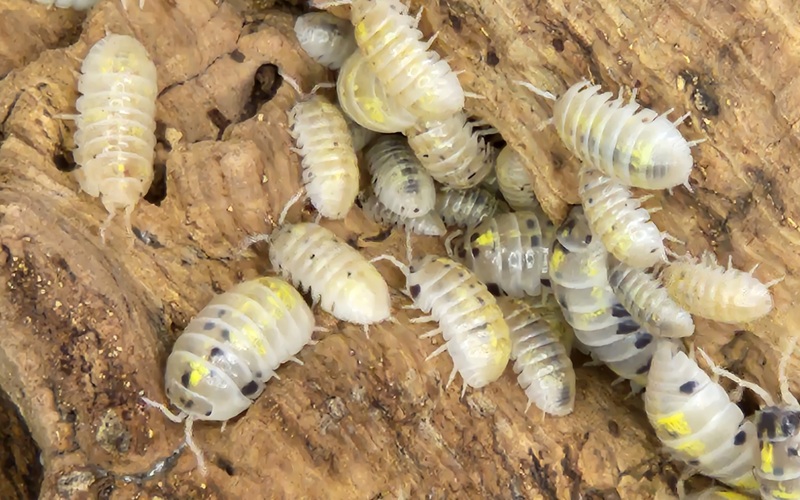
A mesmerizing color morph with black, yellow, and white marbling — incredibly easy to keep.
Overview
The Magic Potion morph of Armadillidium vulgare is one of the most sought-after color forms in the isopod hobby. The American line displays rich black and yellow marbling with bright highlights. Despite their exotic appearance, they share the same hardy, forgiving nature as common isopods — making them an ideal entry point into color morph keeping.
Habitat & Setup
Substrate mix: For best results, use Isopod Paradise Organic Substrate specifically formulated to support healthy colonies. If you would rather mix your own, we recommend a blend of 70% organic topsoil, 10% flake soil, 10% milled sphagnum moss, 8% organics(mushroom compost, earthworm castings and leaf litter) and 2% calcium
Hides & decor: Bark tubes and flats, leaf litter layer, moss patches, coco huts, lotus pods. Cuttlebone for calcium source.
Moisture: Slight gradient — one-third damp, two-thirds dry. Very tolerant of variation.
Diet & Feeding
Enthusiastic, generalist eaters. Carotenoid and pigment-rich foods may help maintain the vibrancy of the yellow coloration.
✓ Feed These
- Oak & magnolia leaf litter
- Sweet potato, carrot (carotenoid-rich)
- Powder formulas like Isopod Chow, Repashy Morning Wood, Bug Burger, etc.
- Fish flakes or dried shrimp (2×/week)
- Cuttlebone — always available
Feeding frequency: Rotate foods on a weekly basis. Remove leftover food when food begins to mold.
Breeding & Lifecycle
Prolific breeders. Magic Potion morphs breed true when kept as a pure colony. One of the fastest-reproducing color morphs in the hobby.
Mancae care: Mancae emerge with faint marbling that develops fully over several weeks. Robust and can stay with adults.
Colony tips: Keep as a closed pure colony to maintain the Magic Potion phenotype. A colony of 50 adults can produce hundreds of offspring in a year.
The 'Magic Potion' color morph was selectively developed by European breeders over many generations — the striking colors don't exist in wild populations.