
Jupiter Cubaris sp.
A large, jewel-toned Cubaris with deep iridescent yellow coloring — the crown jewel of the genus.
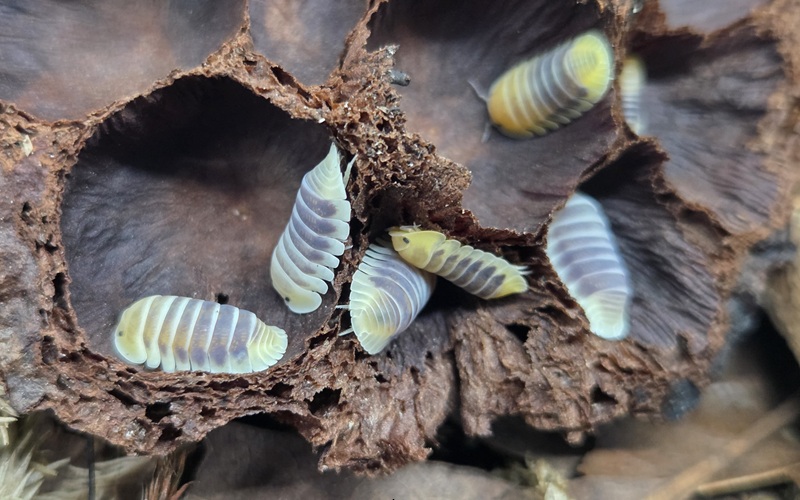
Overview
Cubaris sp. 'Jupiter' is one of the most prized and visually spectacular isopods in the hobby. Its deep yellow, almost iridescent coloration is dependent on a carotenoid-rich diet — neglect carotenoids and the color fades. Larger and bolder than most Cubaris, Jupiter is a high-investment, high-reward species.
Habitat & Setup
Substrate mix: For best results, use Isopod Paradise Organic Substrate specifically formulated to support healthy colonies. If you would rather mix your own, we recommend a blend of 70% organic topsoil, 10% flake soil, 10% milled sphagnum moss, 8% organics(mushroom compost, earthworm castings and leaf litter) and 2% calcium
Hides & decor: Bark tubes and flats, leaf litter layer, moss patches, coco huts, lotus pods. Cuttlebone for calcium source.
Moisture: High moisture throughout. Substrate should be damp at all depths.
Diet & Feeding
Diet directly impacts color intensity. Carotenoids (from shrimp, carrot, sweet potato) must be provided consistently — they cannot synthesize these pigments internally.
✓ Feed These
- Dried shrimp — key for color (3×/week)
- Carrot, sweet potato (carotenoid-rich, always available)
- Indian almond & magnolia leaf litter
- Powder formulas like Isopod Chow, Repashy Morning Wood, Bug Burger, etc.
- Fish flakes, krill powder
Feeding frequency: Feed carotenoid-rich protein weekly. Rotate foods on a weekly basis. Remove leftover food when food begins to mold.
Breeding & Lifecycle
Slower breeder. Requires stable high humidity, high warmth (78°F+), and consistent carotenoid feeding for breeding success. Worth the patience.
Mancae care: Juveniles require carotenoid-rich food from the earliest stages to develop proper coloration. Fine food particles are critical.
Colony tips: Start with as many animals as possible (15+ minimum). Breed slowly — patience and diet consistency are the keys. A colony with faded color needs more shrimp and carrot immediately.
Jupiter isopods cannot produce carotenoid pigments on their own — the vivid orange color comes entirely from what they eat, making diet and color directly linked.