
Clown Armadillidium klugii
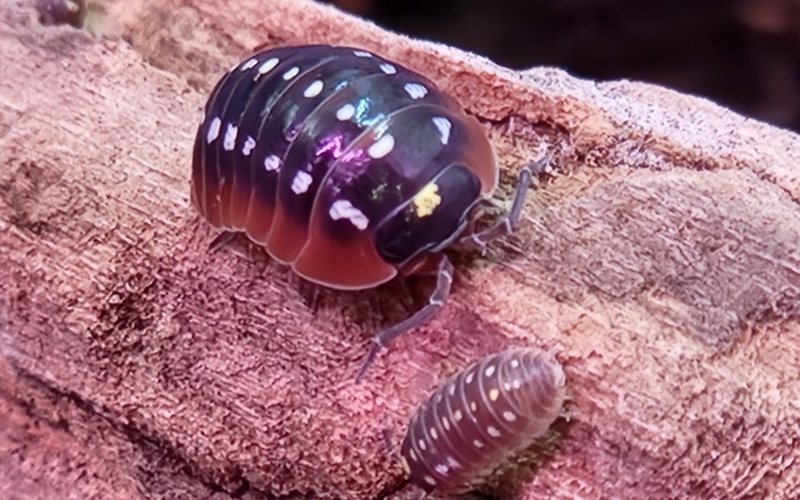
A boldly patterned show-stopper with vivid orange-and-black coloration.
Overview
Armadillidium klugii 'Clown' is one of the most visually striking isopods in the hobby. Its vivid yellow and white blotches on a black background make it a standout display species. Native to the rocky limestone coastlines of Croatia, it prefers moderate, well-ventilated setups with a slight moisture gradient.
Habitat & Setup
Substrate mix: For best results, use Isopod Paradise Organic Substrate specifically formulated to support healthy colonies. If you would rather mix your own, we recommend a blend of 70% organic topsoil, 10% flake soil, 10% milled sphagnum moss, 8% organics(mushroom compost, earthworm castings and leaf litter) and 2% calcium
Hides & decor: Bark tubes and flats, leaf litter layer, moss patches, coco huts, lotus pods. Cuttlebone for calcium source.
Moisture: Mild moisture gradient. Keep one-third damp, two-thirds dry. Good ventilation is key.
Diet & Feeding
The Armadillidium klugii is a detritivore that requires a varied diet to thrive. Its staple diet must consist of decaying hardwood leaves and rotting white wood, supplemented with calcium sources, proteins, and fresh vegetables to ensure healthy molting and reproduction
✓ Feed These
- Oak & magnolia leaf litter
- Sweet potato, carrot (carotenoid-rich for color)
- Dried shrimp or fish flakes
- Powder formulas like Isopod Chow, Repashy Morning Wood, Bug Burger, etc.
Feeding frequency: Rotate foods on a weekly basis. Remove leftover food when food begins to mold.
Breeding & Lifecycle
Reliable breeders once established. Females carry broods in a marsupium — watch for the rounded abdomen of gravid females.
Mancae care: Mancae emerge with faint patterning. Feed fine powders (fish flakes, oat flour) on the substrate surface for the first few weeks.
Colony tips: A colony of 30–50 adults breeds well.
The 'Clown' morph gets its name from its vivid decorative spotted markings, which resemble clown face paint — and its bold, fearless personality.