
Bolivari Porcellio bolivari
A rugged Spanish pill bug with striking mottled patterning and excellent drought tolerance.
Overview
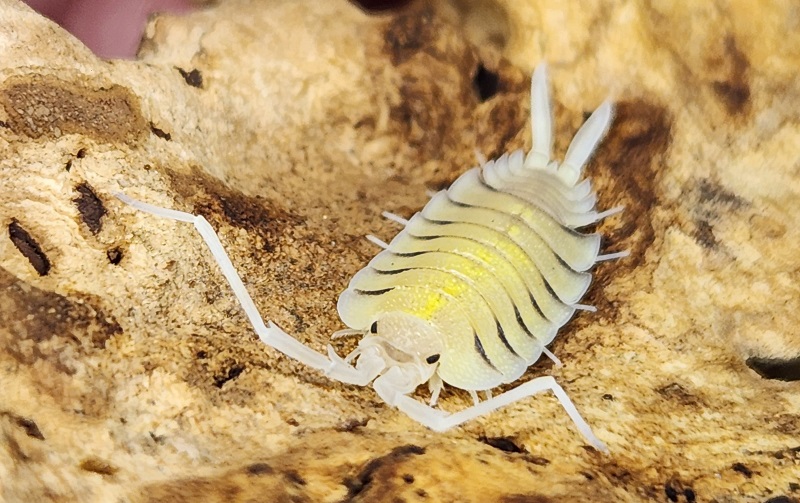
Porcellio bolivari is known for its lemon-yellow coloration and trilobite-like shape. Unlike most isopods, it comes from dry, cave-dwelling areas of eastern Spain, so it prefers good ventilation over high humidity. A larger species with a distinctive look, Bolivari is a great addition for keepers wanting something a bit different. Highly drought-tolerant, it is an ideal species for keepers who want a low-maintenance, visually interesting isopod that thrives with minimal fuss.
Habitat & Setup
Substrate mix: For best results, use Isopod Paradise Organic Substrate specifically formulated to support healthy colonies. If you would rather mix your own, we recommend a blend of 70% organic topsoil, 10% flake soil, 10% milled sphagnum moss, 8% organics(mushroom compost, earthworm castings and leaf litter) and 2% calcium
Hides & decor: Bark tubes and flats, leaf litter layer, moss patches, coco huts, lotus pods. Cuttlebone for calcium source. Adult males may be territorial — provide multiple hides to reduce conflict.
Moisture: Lean dry throughout. A very light misting of one small corner every 5–7 days is sufficient. This species handles dry conditions far better than dampness. Bolivari is one of the most drought-tolerant isopods in the hobby — consistently wet conditions cause bacterial issues and die-offs far faster than dryness will. When in doubt, keep it dry and well-ventilated.
Diet & Feeding
A generalist detritivore that thrives on leaf litter, decaying wood, and vegetable scraps. Calcium supplementation is essential for healthy molting — cuttlebone should always be available. Feed protein in moderation; too much in a dry setup can attract mites.
✓ Feed These
- Oak & magnolia leaf litter
- Rotting wood / cork bark
- Squash, carrot, sweet potato
- Fish flakes or dried shrimp
- Powder formulas like Isopod Chow, Repashy Morning Wood, Bug Burger, etc.
Feeding frequency: This species is adapted to low-nutrient environments and eats less than tropical species — avoid overfeeding. Rotate foods on a weekly basis. Remove leftover food when food begins to mold.
Breeding & Lifecycle
A steady, reliable breeder once the colony is established and kept in dry, warm conditions. Females carry eggs in a marsupium and release fully formed mancae that resemble miniature adults. Breeding accelerates in warmer months or when temperatures are kept above 72°F.
Mancae care: Mancae are hardy and can remain with the adult colony. Ensure fine food particles are available on the substrate surface.
Colony tips: A colony of 20–30 adults in a well-ventilated, dry setup will begin breeding consistently within 2–3 months.
Porcellio Bolivari was named in honor of Ignacio Bolívar, a pioneering Spanish entomologist and naturalist who dedicated his career to documenting the invertebrate life of the Iberian Peninsula in the late 19th and early 20th centuries.